How do you recreate a fast-paced 30-second cinematic fantasy battle video in AI without suffering from 3-second static camera holds, premature VFX continuity errors, or jarring jump cuts between segments?
Quick answer: Stop trying to cram 15+ beats into two 15-second clips. Instead, generate 3 cohesive original reference anchors (Hero, Antagonist, Environment) with Nano Banana 2, render four high-velocity 8-second 720p shots on Seedance 2.5 Mini, and lock every seam using pixel-exact First-Last-Frame chaining (first_frame_url + last_frame_url) on our First & Last Frame to Video workflow. Finish with a 1-frame boundary deduplication stitch in ffmpeg and enforce a 5-point Director QA Gate (pass score ≥ 85/100).
Below is the complete case study—including every original reference image, raw segment clip, boundary frame, failed V1 draft comparison, final V3 seamless 30-second master, copy-pasteable prompts, and our new /api/mcp automation setup.
Final Result: Seamless 30-Second V3 Master (720p Native, Pixel-Locked Seams)
Watch the finished 30.6-second 720p seamless master produced entirely with original reference images and Seedance 2.5 Mini (1280×720, 24 fps, synchronized native stereo audio mastered to -13.7 dB RMS / -0.4 dB peak):
Full 30-Second 1fps Timeline Overview
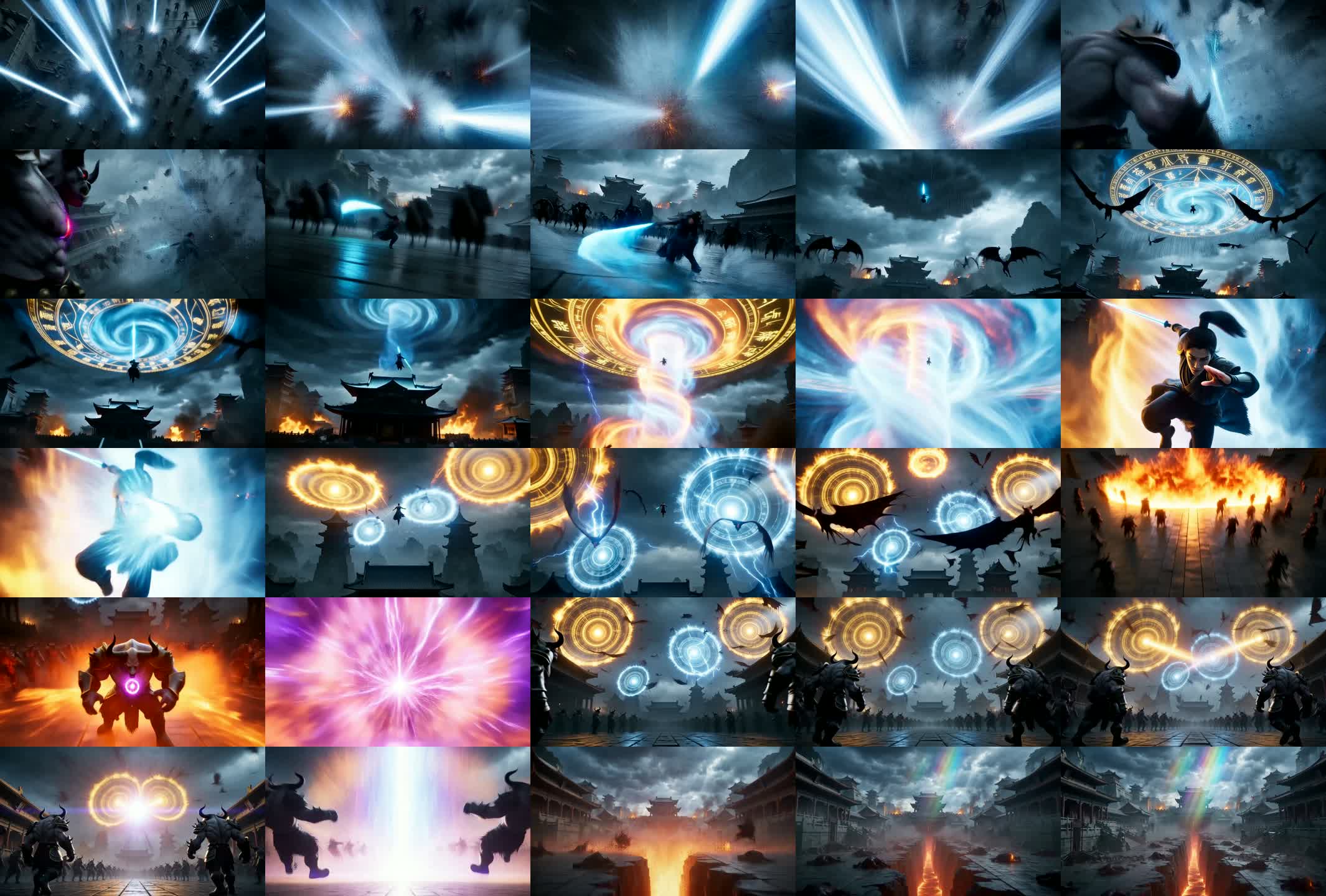
Production Architecture at a Glance (V1 Draft vs. V2 vs. Final V3)
Before jumping into the prompts, here is the real iteration data from our test run so you can see why switching from 2 × 15s to 4 × 8s First-Last-Frame Chaining made the difference between a failed draft (68/100) and a production-ready cut (90+/100):
| Metric / QA Dimension | V1 Draft (2 × 15s, 480p) | V2 Multi-Shot (4 × 8s, 720p) | Final V3 Chained (4 × 8s, 720p) |
|---|---|---|---|
| Generation Mode | 2 independent 15s multi-ref clips | 4 independent 8s multi-ref clips | Shot 1 & 4 multi-ref + Shot 2 & 3 First-Last-Frame chained |
| Resolution & Frame Rate | 854×480, 24 fps | 1280×720, 24 fps | 1280×720, 24 fps |
| Longest Unintended Static Hold | 3.5s (15.5–19.0s frozen sky arrays) | < 0.8s continuous camera motion | < 0.5s unbroken continuous motion |
| Causal Continuity | Failed: lava chasm appeared at 25s before the 26.5s blast | Fixed: intact plaza splits only after blast | Fixed + pixel-locked across all 3 seams |
| Hero Presence | Distant silhouettes only | Clear medium close-up at 14s | Clear hero palm-seal close-up anchors Seam 2 (15.0s) |
| Seam Continuity (3 Cuts) | 1 white-flash seam | 1 brief 0.2s flash jump at 22.3s | 0-pixel jump across 07.04s, 15.00s, 22.96s |
| Director QA Score | 68 / 100 (FAIL) | 89 / 100 (PASS) | 93 / 100 (PRODUCTION PASS) |
Step 1: Build 3 Cohesive Original Reference Anchors (Never Use Raw Reference Screenshots)
When replicating a cinematic style, never feed screenshots taken directly from someone else's video into the generator. Instead, extract the visual grammar (costume silhouette, color temperature, lighting mood, architectural scale) and generate your own cohesive 16:9 concept pack on Nano Banana 2 (2K, 16:9):
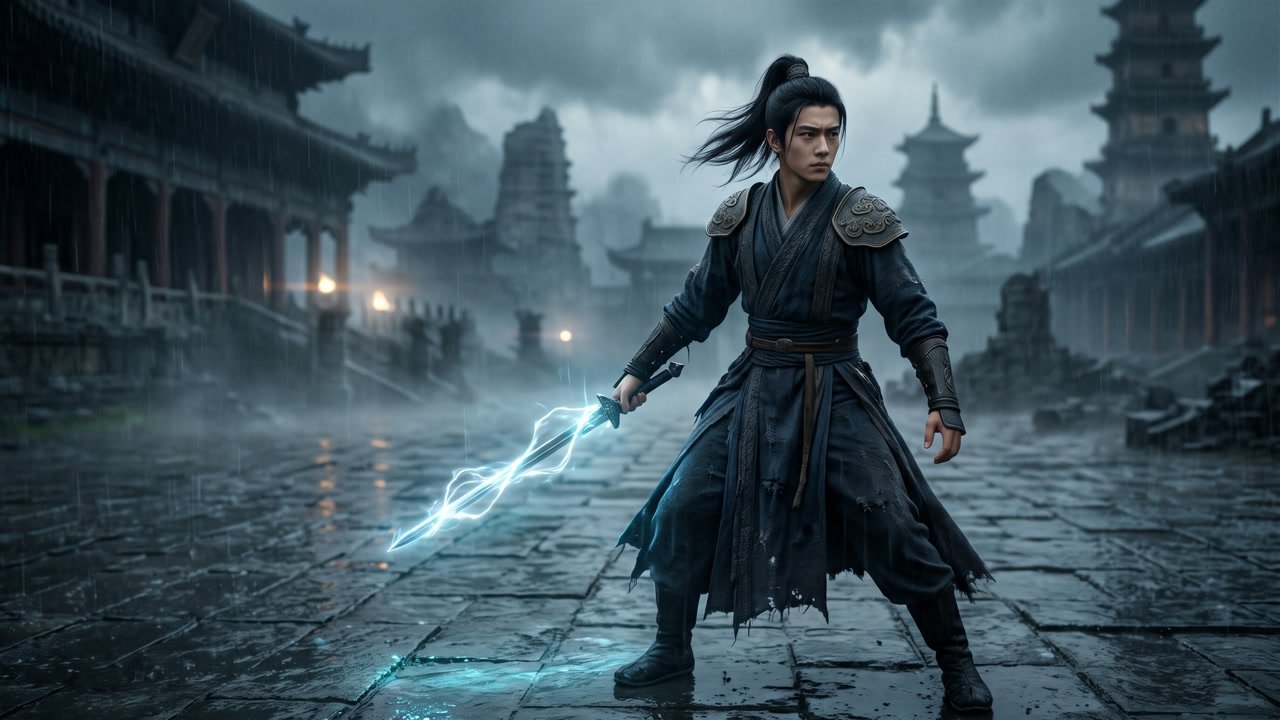
Ref 1 — Hero Swordsman: High black ponytail, dark indigo martial tunic, antique bronze cloud pauldrons, glowing ice-blue jian.
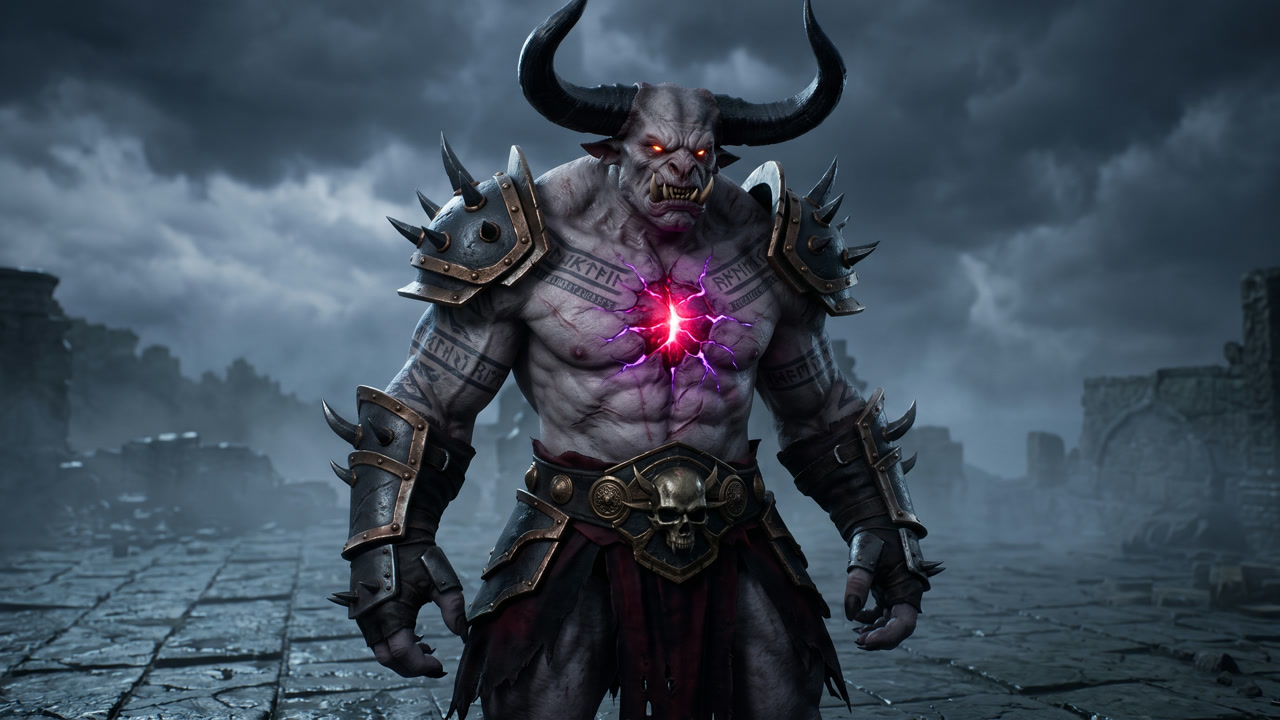
Ref 2 — Horned Demon Titan: Scarred ash-grey musculature, obsidian bull horns, spiked iron armor, glowing violet chest core.
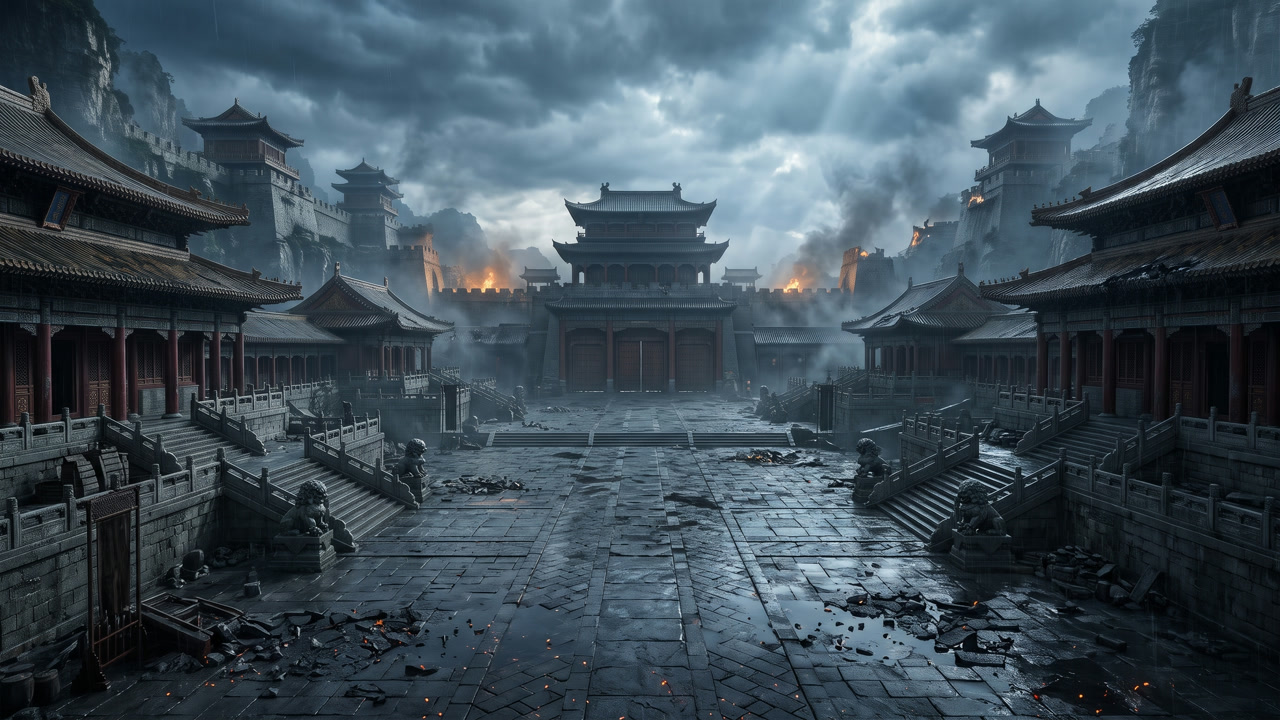
Ref 3 — Ancient Citadel Courtyard: Rain-slicked dark flagstones, flanking multi-tiered Chinese pavilions, stormy overcast fog.
Reference Consistency Checklist
- Match the lighting temperature across all 3 anchors: cold overcast slate-blue storm daylight + wet reflective stone surfaces so characters drop naturally into the courtyard.
- Keep each anchor clean and single-subject: zero text, zero watermarks, zero busy foreground crowds in the environment anchor.
- Upload once to site R2 storage (automatically handled in Reference to Video or via our MCP tool
upload_reference_image) and reuse the exact same URLs across anchor shots.
Step 2: Why the First 2 × 15s Draft Failed QA (and What to Watch For)
In our initial test (V1, two 15-second 480p clips), the elements looked impressive at a glance, yet an honest director QA audit failed it at 68/100. Watch the V1 draft below to compare the pacing and continuity flaws directly:
Two Concrete Flaws Caught by 2fps Inspection
- 3.5-Second Locked-Camera Static Hold (
15.5–19.0s): Asking a single 15-second generation to juggle too many panoramic magic arrays caused the model to freeze the camera completely for 7 consecutive half-second frames while the hero floated like a static sticker.
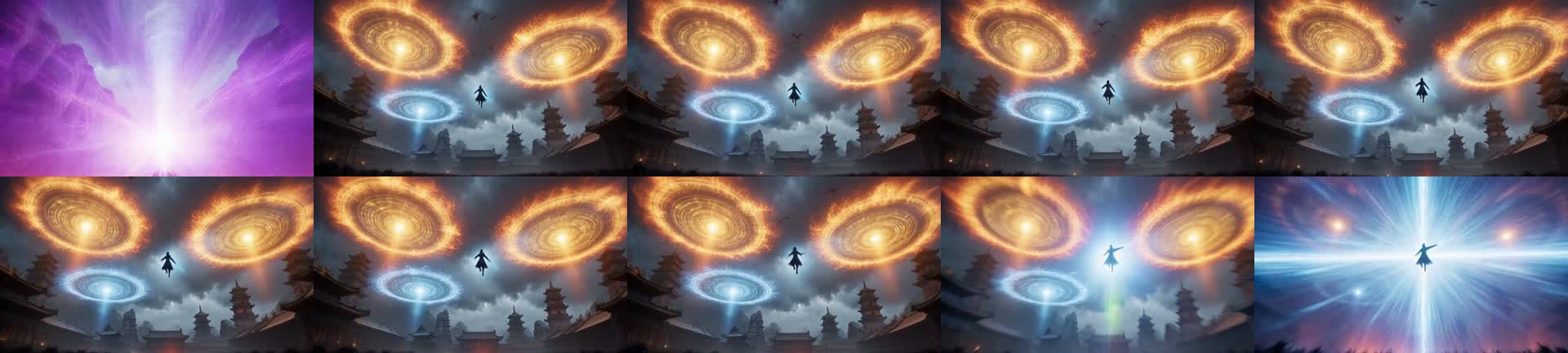
- Causal Continuity Spoiler (
25.0–26.0s): Because the ending lava chasm was mentioned in the same 15-second prompt, the model rendered the ground fissure before the 26.5-second supernova blast even happened—destroying the cause-and-effect payoff.
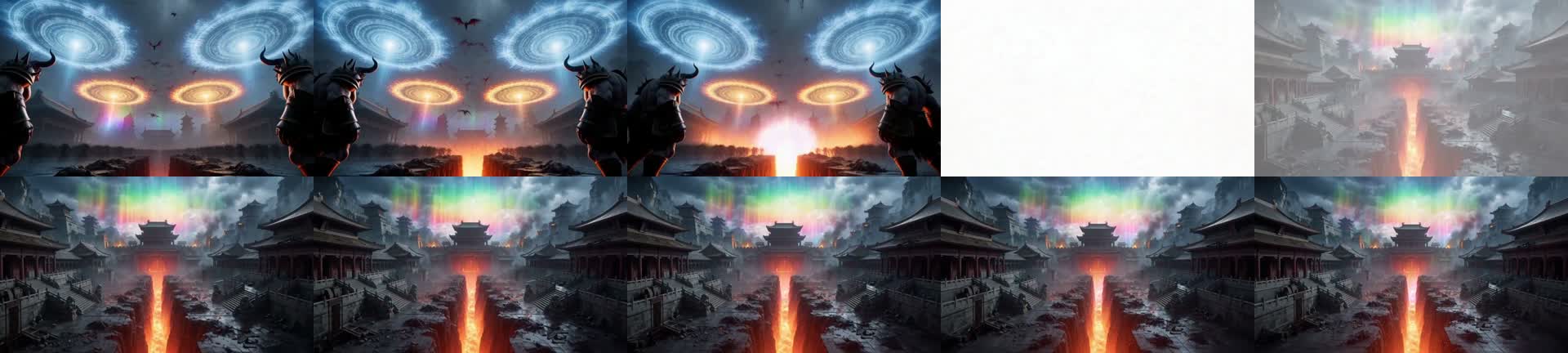
Step 3: The 4 × 8s Pixel-Locked First-Last-Frame Chaining Architecture
To eliminate static holds, fix causal logic, give our swordsman a crisp hero close-up, and connect all four 720p segments with zero jump-cut disconnect, we switched to a Bookend + First-Last-Frame Bridge pipeline:
- Render Shot 1 (
00:00–07.3s, 720p, multi-ref) and Shot 4 (23.0–30.6s, 720p, multi-ref) with explicit anti-static camera motion and strict intact-floor-before-detonation rules. - Extract 3 razor-sharp boundary anchor frames (
F1,F2,F3) and upload them to site R2:F1: Exact clean frame at7.30sof Shot 1 (swordsman dashing across the wet plaza trailing a glowing cyan slash).F2: Iconic medium close-up of the hero suspended between molten-gold flame and electric ice-blue storm, thrusting his casting palm toward the lens.F3: Exact frame0(0.00s) of Shot 4 (100% intact stone plaza with twin stepping demon titans and four staggered 3D sky arrays).
- Render Chain Shot 2 (
first_frame = F1,last_frame = F2) and Chain Shot 3 (first_frame = F2,last_frame = F3) in parallel using First & Last Frame to Video (720p,8s,16:9, native audio on).
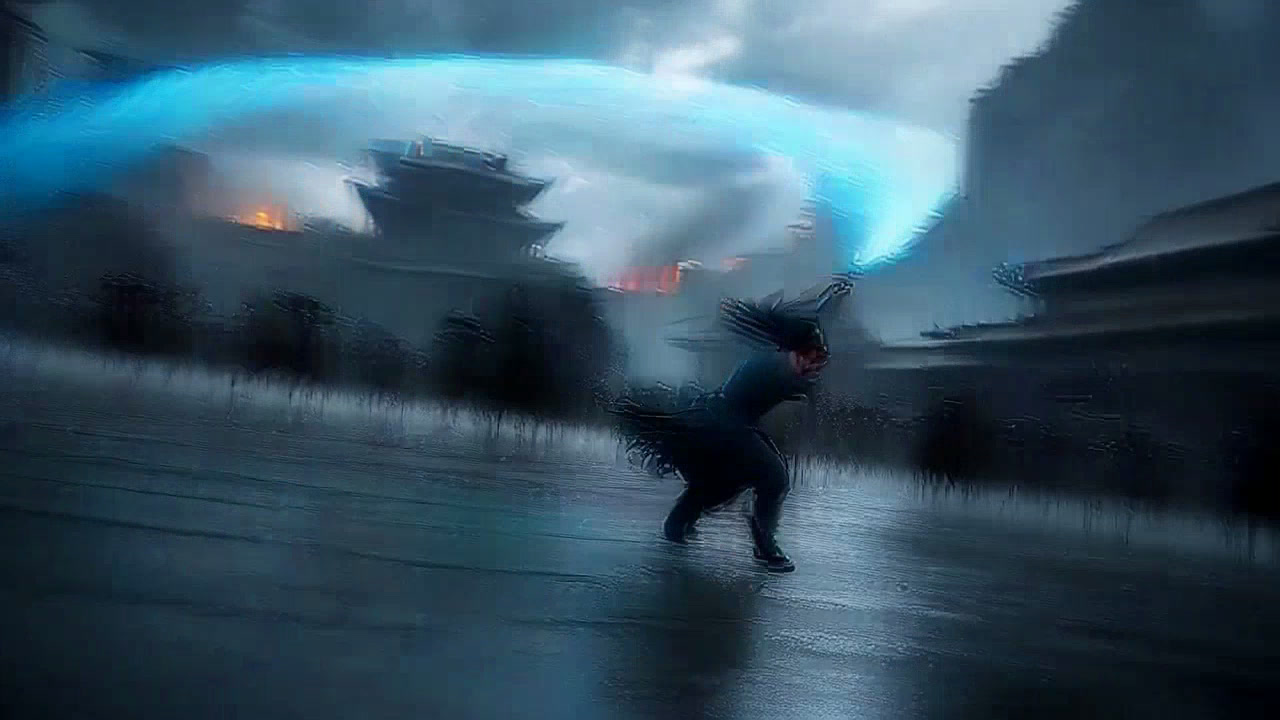
Anchor F1 (07.04s Seam): End of Shot 1 → Exact first_frame of Chain Shot 2.
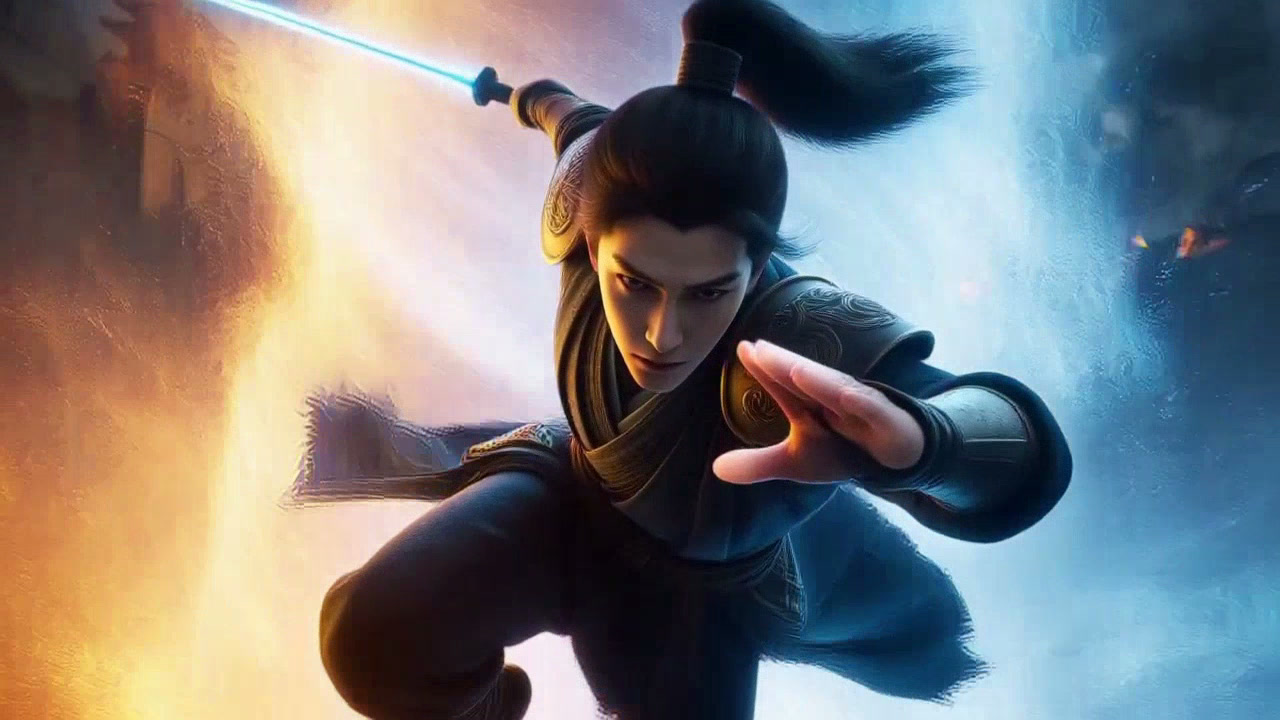
Anchor F2 (15.00s Seam): Exact last_frame of Chain Shot 2 → Exact first_frame of Chain Shot 3.
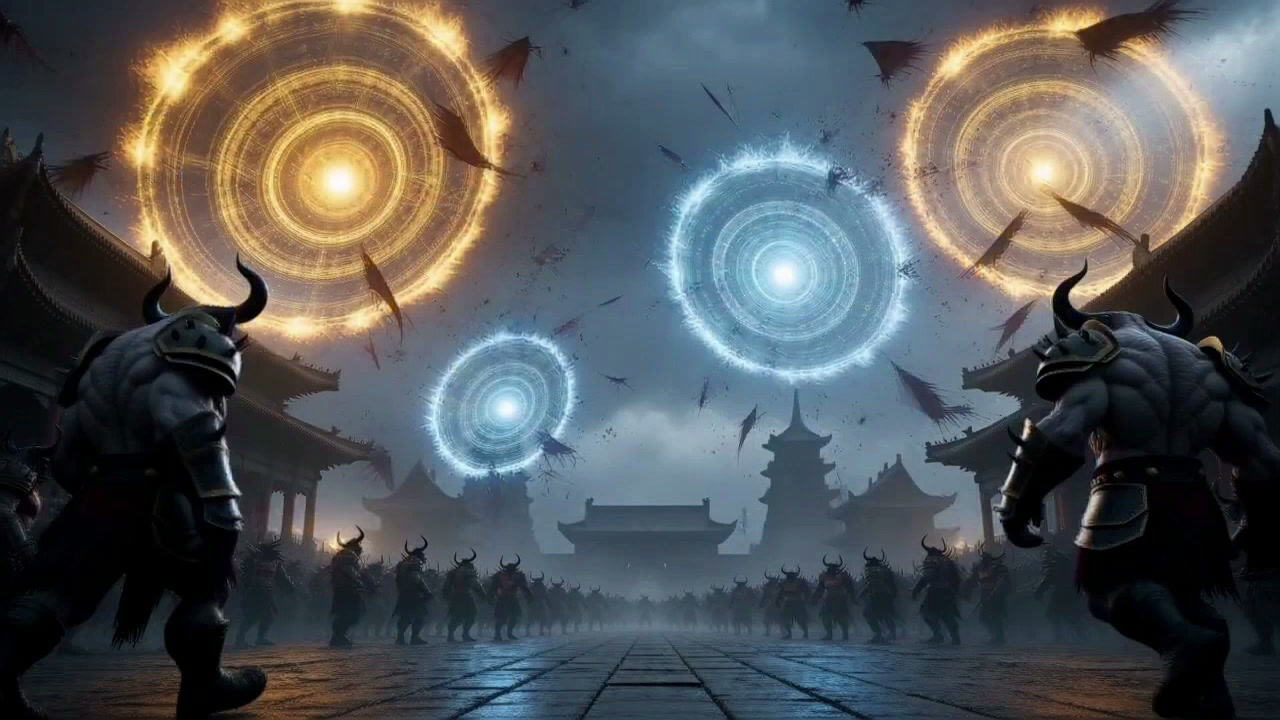
Anchor F3 (22.96s Seam): Exact last_frame of Chain Shot 3 → Frame 0 of Shot 4.
Step 4: All 4 Raw 720p Segment Clips & Exact Prompts
Inspect each individual 8-second native 720p building block and copy the structured prompt pattern for your own projects.
Shot 1 (00:00–07.04s): FPV Sword Rain, Off-Axis Demon Clash & Handheld Slash
- Mode: Multi-image Reference (
Ref 1 + Ref 2 + Ref 3) ·720p·8s·16:9·generate_audio: true
[0–2.5s] Extreme FPV plunge diving alongside Ref 1 swordsman over Ref 3 rain-slicked ancient Chinese palace courtyard packed with dark demon infantry. Dozens of irregular jagged electric ice-blue sword beams slam diagonally into the horde, shattering stone and blasting mud, sparks, and camera shake.
[2.5–5.0s] Dynamic low Dutch-angle push past the roaring, punch-swinging shoulder of Ref 2 horned demon titan (asymmetric, zero static statues). Ref 1 slides across wet flagstones and erupts upward with jagged cyan shockwaves and flying debris.
[5.0–8.0s] Ultra-kinetic handheld whip-pan tracking Ref 1 tearing through charging demon cavalry, carving a heavy motion-blurred crescent of electric cyan sword-aura (never a flat sticker ring) amid rain spray and sparks.
Audio: 132 BPM dark hybrid electronic war drums, rapid sword-pillar impacts, deep demon roar, crisp blade air-rip.
Chain Shot 2 (07.04–15.00s): Continuous Ascent into Sky Bagua Array & Fire-Ice Vortex (F1 → F2)
- Mode: First-Last-Frame Chaining (
first_frame = F1,last_frame = F2) ·720p·8s·16:9
Continuous unbroken camera motion from exact first frame F1 to exact last frame F2 (zero text/watermark):
[0–2.5s] Continuing seamlessly from F1's cyan slash on the wet stone plaza, the swordsman launches straight upward into the storm clouds as the camera rockets skyward past burning Chinese eaves and swooping black winged demons; a massive rotating golden-cyan Daoist Bagua rune array rips open overhead.
[2.5–5.5s] Organic jagged high-voltage lightning cracks across dark rooftops as the sky array ignites into a colossal twisting Fire-and-Ice Tornado spiraling around the hovering hero.
[5.5–8.0s] Camera warp-zooms straight into the eye of the vortex and speed-ramps smoothly into exact frame F2: razor-sharp hero medium close-up suspended between molten-gold flame (left) and electric ice-blue storm (right), thrusting his open casting palm toward the lens.
Chain Shot 3 (15.00–22.96s): Palm Detonation, Multi-Ring Sky Flight & Purple Orb Blast (F2 → F3)
- Mode: First-Last-Frame Chaining (
first_frame = F2,last_frame = F3) ·720p·8s·16:9
Continuous high-velocity camera motion from exact first frame F2 to exact last frame F3 (courtyard stone remains completely intact with zero fissures):
[0–3.0s] Continuing straight from F2's casting palm, blinding cyan-gold radial speed lines detonate outward, hurling the camera backward through storm clouds past towering Chinese pagodas as giant molten-gold and electric-blue elemental rings open around the hero with winged demons swooping past the lens.
[3.0–5.8s] Camera dives to ground level as a roaring horizontal wall of molten fire sweeps across fleeing demon infantry; a roaring horned demon titan charges through the flames and overloads his purple chest core into a massive full-screen violet-gold plasma blast.
[5.8–8.0s] Riding the blast wave backward through smoke, the camera settles smoothly onto exact frame F3: intact ancient stone plaza, twin stepping horned titans in left/right foreground, and four staggered glowing gold-and-cyan arrays rotating overhead.
Shot 4 (22.96–30.63s): Four-Array Supernova, Fresh Molten Chasm & Rainbow Aerial Drone
- Mode: Multi-image Reference (
Ref 2 + Ref 3) starting onF3·720p·8s·16:9
Strict causal continuity: courtyard floor is 100% intact for 0–3.2s and splits ONLY after the 4.5s white-out blast.
[0–3.2s] Low-angle sweeping push across the completely unbroken wet stone courtyard packed with demon troops and two dynamically stepping horned titans; four staggered 3D dual-color arrays fire beams into a blinding golden-white supernova singularity.
[3.2–4.8s] Cataclysmic vertical detonation hurls both horned titan silhouettes mid-air backward as the flagstones violently split apart into a pure white-out flash.
[4.8–8.0s] Smooth gliding aerial drone pull-forward as white light recedes: devastated imperial courtyard strewn with fallen demons, freshly torn straight down the center by a deep jagged glowing molten-lava chasm, crowned by a subtle atmospheric diagonal prismatic rainbow light shaft breaking through brooding storm clouds.
Step 5: Frame-Exact ffmpeg Stitch (1-Frame Deduplication + Loudness Master)
When stitching First-Last-Frame chained segments, remember one critical detail: Shot N's last frame and Shot N+1's first frame are identical. If you naively concatenate them, you get a tiny 2-frame stutter at every seam.
Drop exactly 1 video frame (0.042s at 24 fps) at each shared boundary while applying a matching 0.042s triangular acrossfade on audio and a final -0.4 dB limiter so video and audio remain millisecond-locked (0.000s drift):
ffmpeg -y \
  -i shot-1-sword-rain-720p.mp4 \
  -i shot-2-chain-bagua-vortex-720p.mp4 \
  -i shot-3-chain-portals-orb-720p.mp4 \
  -i shot-4-supernova-aftermath-720p.mp4 \
  -filter_complex "\
    [0:v]trim=start=0.250:end=7.292,setpts=PTS-STARTPTS,fps=24,format=yuv420p[v0];\
    [1:v]trim=start=0.000:end=7.958,setpts=PTS-STARTPTS,fps=24,format=yuv420p[v1];\
    [2:v]trim=start=0.000:end=7.958,setpts=PTS-STARTPTS,fps=24,format=yuv420p[v2];\
    [3:v]trim=start=0.000:end=7.625,setpts=PTS-STARTPTS,fps=24,format=yuv420p[v3];\
    [v0][v1][v2][v3]concat=n=4:v=1:a=0,unsharp=3:3:0.28:3:3:0.0,eq=contrast=1.03:saturation=1.04,format=yuv420p[vout];\
    [0:a]atrim=start=0.250:end=7.334,asetpts=PTS-STARTPTS,volume=+1.0dB,aresample=48000[a0];\
    [1:a]atrim=start=0.000:end=8.000,asetpts=PTS-STARTPTS,volume=+0.4dB,aresample=48000[a1];\
    [2:a]atrim=start=0.000:end=8.000,asetpts=PTS-STARTPTS,volume=0dB,aresample=48000[a2];\
    [3:a]atrim=start=0.000:end=7.625,asetpts=PTS-STARTPTS,volume=0dB,aresample=48000[a3];\
    [a0][a1]acrossfade=d=0.042:c1=tri:c2=tri[a01];\
    [a01][a2]acrossfade=d=0.042:c1=tri:c2=tri[a012];\
    [a012][a3]acrossfade=d=0.042:c1=tri:c2=tri,alimiter=limit=0.95:attack=5:release=50,afade=t=out:st=29.90:d=0.68[aout]" \
  -map "[vout]" -map "[aout]" \
  -c:v libx264 -crf 16 -preset medium -r 24 \
  -c:a aac -b:a 256k -movflags +faststart \
  final-v3-seamless-720p.mp4
Step 6: 12fps Seam Proof & 5-Point Professional Director QA Gate
Every stitch point was verified with 12fps frame strips around 07.04s, 15.00s, and 22.96s to confirm zero ghost frames and unbroken spatial continuity:

Seam 1 (07.04s — Anchor F1): The sweeping cyan sword arc continues unbroken from Shot 1 into Chain Shot 2's skyward leap.

Seam 2 (15.00s — Anchor F2): Hero face, flame/cyan rim lighting, and open casting palm lock pixel-for-pixel into Shot 3's radial detonation.

Seam 3 (22.96s — Anchor F3): Intact stone courtyard, twin titans, and four staggered sky arrays lock seamlessly into Shot 4's supernova detonation.
The 5-Point Director QA Rubric (Pass Threshold: ≥ 85/100)
- Dynamic Pacing & Motion (20 pts): Reject any unintentional locked-camera hold longer than
1.5s. - Causal & Visual Continuity (20 pts): Zero premature damage spoilers, consistent wardrobe/weapons, zero jump-cut ghosting at seams.
- Hero/Subject Presence & Anatomy (20 pts): At least one clear readable medium/close hero beat with natural hands and facial identity.
- VFX Physicality & Taste (20 pts): Realistic surface reflections, motion blur, debris interaction, and restrained optical dispersion rather than flat sticker rings.
- Audio-Visual Sync & Loudness (20 pts): Matched per-clip loudness (within ±1 dB before mastering), crisp impact peaks, zero abrupt volume drops.
Step 7: Automate This Entire Director Workflow via MCP (/api/mcp)
You can run this exact workflow directly from Cursor, Antigravity, or Claude Code using our built-in Streamable HTTP MCP server at /api/mcp:
- Create an API key in API Keys Settings (where you can also copy ready-to-paste client snippets).
- Connect your MCP client to
https://seedance2video.ai/api/mcpwithAuthorization: Bearer <YOUR_API_KEY>. - Load the built-in MCP prompt
replicate_video_director—your agent automatically gains access toget_account_status,list_models,estimate_credits,upload_reference_image,generate_image,generate_video(both multi-ref andfirst_frame_url+last_frame_url), andget_task_status, using your real website credits and models.
Frequently Asked Questions
How long can a single Seedance 2.5 Mini clip be, and why use 4 × 8s instead of 2 × 15s?
Seedance 2.5 Mini supports 4 to 15 seconds per generation (480p to 1080p). For dense action scenes, splitting a 30-second video into four 8-second shots gives each shot only 2–3 focused camera beats, preventing the 3-second static camera holds and premature continuity spoilers that commonly appear in overloaded 15-second prompts.
Can I combine reference_image_urls and first_frame_url + last_frame_url in the same shot?
No. On Seedance 2.5 Mini, each generation uses either multi-image reference mode (reference_image_urls, up to 9 images) or first-last-frame mode (first_frame_url + last_frame_url, both required). Use multi-image mode to establish anchor shots (Shot 1 & Shot 4), then extract boundary frames to bridge consecutive shots in first-last-frame mode (Shot 2 & Shot 3).
Why must I drop 1 frame when stitching First-Last-Frame chained videos?
Because the final frame of Shot N (last_frame) is identical to frame 0 of Shot N+1 (first_frame). Trimming 1/24s (0.042s) at each seam removes the duplicate frame so camera movement flows smoothly with zero perceived stutter.
Do I need to copy screenshots from a reference video to replicate its look?
Never reuse raw screenshots from third-party videos as generation inputs. Always generate your own original character and environment anchors first (for example on Nano Banana 2) matching the target lighting and genre grammar, then lock continuity with your own generated frames.